Strategic advisory

Lean Thinking

Eliminating waste means creating more value for the customer with fewer resources, less energy and less scrap. We help companies apply the Lean philosophy, from process mapping to continuous improvement.

Continuous improvementLean Thinking

Definition

What Lean is and what Lean Thinking means

Lean is a management philosophy, born in the Toyota Production System, that aims to eliminate everything that does not create value for the customer.

Lean Thinking is the mindset that follows from it: treating every activity, from sending an email to a machining job on the shop floor, as part of a process that can be improved.

Traditional
Goal
Optimise times and methods
Scope
Individual processes, mostly in production
Perspective
Quantitative approach
Lean
Goal
Eliminate waste
Scope
The whole value chain: production, services, marketing and supply chain
Perspective
Big-picture view

Principles

The 5 principles of the Lean philosophy

01

Identify value

Start from what the customer is really willing to pay for.

02

Map the value stream

Lay out every activity and every flow of materials and information.

03

Create flow

Keep work moving without interruptions, waits or bottlenecks.

04

Establish pull

Produce only what is needed, when it is needed, on customer demand.

05

Seek perfection

Continuous improvement (Kaizen): every process can always be improved.

From 05 back to 01: every improvement becomes the new starting point.

Efficiency and optimisation

How process efficiency reduces an organisation's impact

Every form of waste has a hidden cost in energy, materials and emissions. That is why Lean Thinking is also a lever for energy efficiency and decarbonisation: by cutting overproduction, scrap, downtime and unnecessary handling, a company consumes less for the same output.

Results become measurable when process improvement is linked to environmental indicators.

Less energy per unit produced

Downtime, waits and redundant processing have a direct effect on consumption.

Fewer materials and less waste

Fewer defects and less overproduction mean less scrap to manage.

Data for reporting

Process improvements feed environmental KPIs, the carbon footprint and the sustainability report.

Our approach

How we support you

01

Training

We share with management and the team the Lean principles and tools the journey is built on.

02

Building the team

We define roles, responsibilities and senior management involvement to lead the project.

03

AS IS analysis

We map processes, flows and waste using Value Stream Mapping and Spaghetti Charts, adding data on consumption and scrap where useful.

04

Implementation

We design and introduce the new operating standard, working on layout, 5S, Standard Work and visual KPIs.

05

Continuous improvement

We consolidate results over time through periodic audits, the PDCA cycle and performance indicators.

Examples of applications

Some Lean Thinking tools

  1. S1Sort
  2. S2Set in order
  3. S3Shine
  4. S4Standardise
  5. S5Sustain

The 5S method

Sort, Set in order, Shine, Standardise, Sustain. Tidy, safe workstations, less time lost looking for tools, anomalies and losses spotted earlier. It is the foundation of every Lean journey.

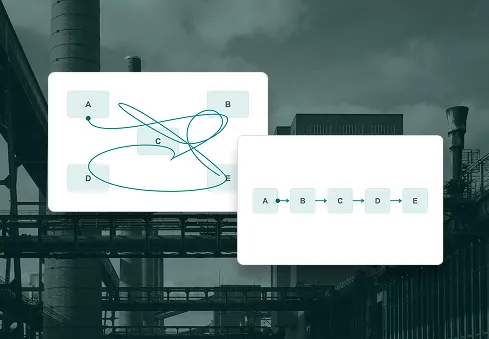
ABCDE

Spaghetti Chart

A map of the routes people and materials take through a department. It makes handling waste visible and helps redesign the layout. It often shows that only a small share of an operator's time adds value.

QuoteNegotiationOrderwaits×2double data entryValue added

Value Stream Mapping, in the office too

Mapping a process such as quoting → negotiation → order entry brings out waits, email hand-offs and double data entry. Lean is not just about the factory.
Strategic advisory

From process efficiency to decarbonisation

We measure CO₂e emissions, set reduction targets and actions, and build your company's decarbonisation plan.

Discover the decarbonisation plan

FAQ

Frequently asked questions about Lean Thinking

Lean is a management philosophy, born in the Toyota Production System, that aims to eliminate waste, meaning every activity that consumes resources without creating value for the customer.
It is the mindset that follows from the Lean philosophy: treating every activity, from sending an email to a machining job on the shop floor, as part of a process that can be improved.
There are five: identify value from the customer's point of view, map the value stream, create flow by removing waits and bottlenecks, establish pull by producing only what is needed when it is needed, and seek perfection through continuous improvement (Kaizen).
Waste is any activity that consumes resources without creating value for the customer. Lean identifies eight kinds: overproduction, inventory, transport, motion, waiting, over-processing, defects and unused talent.
The 5S method to organise and standardise workstations, the Spaghetti Chart to make the routes of people and materials visible and redesign the layout, and Value Stream Mapping applied to office processes too, such as quoting, negotiation and order entry.
No. Lean was born in the factory, but it also applies to offices, services, logistics and the supply chain: anywhere there are waits, redundant steps, double data entry or errors to fix.
Every form of waste has a hidden cost in energy, materials and emissions. By cutting overproduction, scrap, downtime and unnecessary handling, a company consumes less for the same output. When process improvement is linked to environmental indicators, results become measurable in terms of consumption, waste and CO₂e emissions, and they feed the carbon footprint and the sustainability report.
It depends on the scope and the number of processes involved. After the AS IS analysis we agree on a plan with phases, timing and indicators; continuous improvement then carries on over time with periodic audits and the PDCA cycle.

Lean Thinking

Talk to a Lean consultant

Tell us which processes you want to improve: one of our consultants will get back to you to define the right path, from AS IS mapping to the new standard.

  • A 30-minute call with an expert, no commitment
  • We get back to you within 24 working hours
  • A first concrete direction for your ESG goals
This field is required.
Please enter a valid email.
This field is required.

No spam. Your data is processed in accordance with the GDPR.

Thank you, we will be in touch

We have received your request. An ESG expert from Green Future Project Group will contact you within 24 working hours.