Strategic advisory

Decarbonisation Plan

With Green Future Project Group, build a decarbonisation strategy to cut your company's emissions in line with the leading reference standards.

  • GHG Protocol
  • ISO 14064
  • CSRD
  • SBTi

Our method

GFP Group's decarbonisation plan turns emissions data into concrete reduction actions, through an integrated Lean & Carbon Reduction approach.

The 6 project phases

A structured path in which every phase delivers concrete, measurable results, up to the definition of the future Value Stream Map and the emissions reduction plan.

Carbon Footprint calculation (Scope 1, 2 and 3)

Powered by Carbon Footprint & Utilities Optimisation

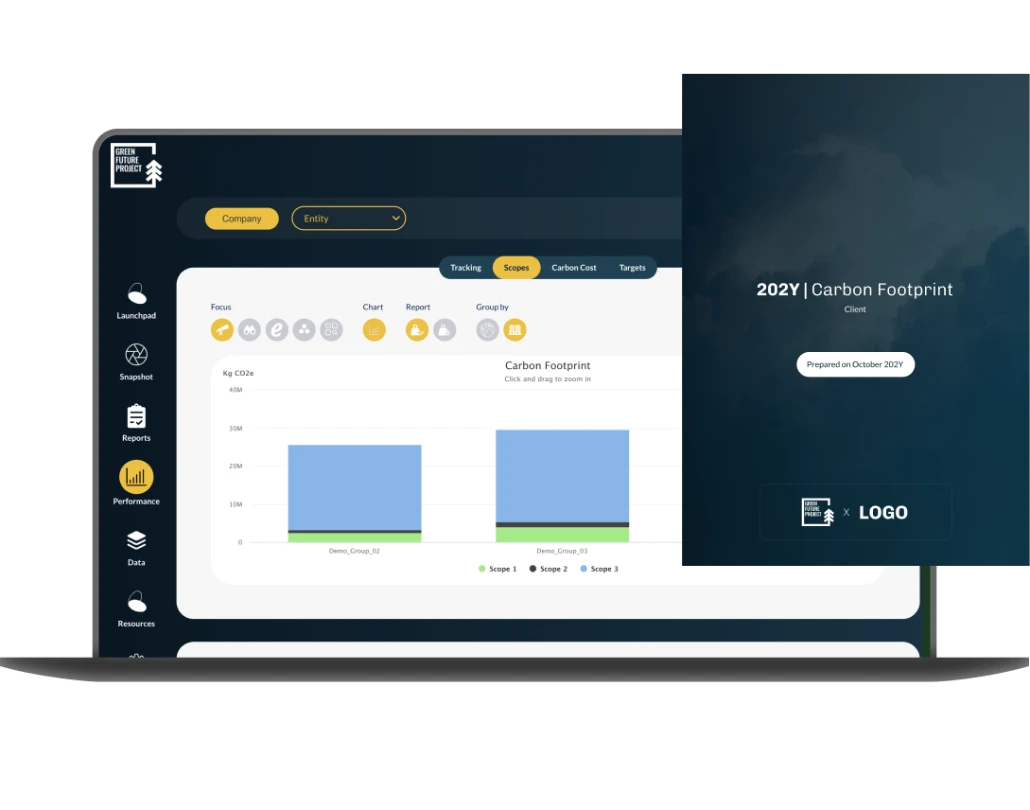
We build the emissions baseline following the 5 steps of the GHG Protocol: identifying emission sources, mapping activities and sites, collecting energy and fuel data, calculating emissions with standardised factors and drafting the analytical report. Data entry takes place in the Carbon Footprint & Utilities Optimisation software, which we also use for our own internal reporting.

Outputs

  • GHG inventory
  • Scope 1, 2 and 3 report
  • Map of emission hotspots by process

Energy consumption monitoring

We turn data into operational levers with the platform's Utilities Optimisation module: we make waste and inefficiencies visible, analyse consumption by process and by building, and support real-time decisions through baselines, energy KPIs and dedicated dashboards.

Outputs

  • Energy consumption baseline
  • Energy KPIs
  • Dedicated dashboards

Operational and production process audit

EEnvironmentalGGovernance

We look at processes through a dual lens: identifying the waste that slows down operational efficiency (E) and improving efficiency, quality and sustainability at the same time (G).

Outputs

  • Operational audit report
  • List of improvement projects
  • Assessment of the economic and environmental impact

Inbound & outbound logistics audit

We rethink logistics flows to make them more efficient and sustainable, reducing costs and Scope 3 emissions and making the supply chain more robust and responsive.

Outputs

  • Logistics flow map
  • Environmental logistics KPIs
  • Inbound & outbound optimisation plan

Value Stream Mapping

We map the current value creation flow in an integrated way: times, inventory, energy consumption and emissions in a single map. This gives a shared, objective view of the inefficiencies that affect costs, timing and sustainability.

Outputs

  • Value Stream Map
  • Total lead time and % of value added
  • Energy consumed and CO₂ produced

Decarbonisation Plan

Starting from the analysis of the company's current situation, we design the optimised future flow by applying Lean principles and solutions aimed at reducing consumption and emissions. The phase ends with a concrete roadmap for operational transformation.

Outputs

  • TO BE Value Stream Map
  • Decarbonisation plan with actions, priorities and timelines
  • Reduction targets for costs, waste, lead times and emissions

Expected benefits

  • Structural reduction of operating costs
  • Measurable reduction of CO₂e emissions
  • Improved industrial margins
  • Alignment between industrial strategy, sustainability and ESG
  • A solid basis for continuous improvement and regulatory compliance

Find out how to build a decarbonisation path for your company.

Talk to an expert

How we measure the Carbon Footprint

The same software our clients use

Measuring Scope 1, 2 and 3 emissions is the starting point of our decarbonisation path. To do it we use Carbon Footprint & Utilities Optimisation, the same software we provide to our clients, developed together with an Oxford University spin-off and aligned with the GHG Protocol.

The platform collects and organises data on energy, transport, water, waste, procurement and other emission sources, building a complete baseline and returning dashboards and reports ready for analysis.

We don't just offer a tool: we use the very same technology ourselves that we use to help companies measure and reduce their emissions.

Discover the software
Carbon Footprint dashboard: emissions by country, energy consumption and alerts
Validation opinion IT339852-1GHG Protocol Corporate Standard
Bureau Veritas

Project outputs

Concrete outputs to keep improving

Four measurable outputs that turn the analysis of emissions and processes into a structured path of reduction and continuous improvement.

Certifiable baseline

An emissions baseline defined with measurable, traceable and verifiable criteria, ready for certification or third-party verification in line with ISO 14064.

Integrated operational and environmental KPIs

Indicators linking emissions and process efficiency, to measure the results achieved and track how they evolve over time.

A concrete, measurable Lean plan

An action plan that turns the opportunities identified into prioritised, measurable interventions to reduce waste, inefficiencies and emissions.

Readiness for ESG audits and continuous improvement

A structured roadmap to monitor progress, spot new gaps and update improvement actions over time.

Regulatory focus

CBAM: what changes for companies importing from outside the EU

The Carbon Border Adjustment Mechanism (EU Reg. 2023/956) puts a price on the emissions embedded in goods imported into the Union, aligning it with the cost borne by European producers. The definitive phase has been in force since 1 January 2026.

Key dates

1 January 2026Start of the definitive phase and obligation to be authorised as a CBAM declarant above the threshold
1 February 2027Sale of CBAM certificates opens, including for 2026 imports
30 September 2027First annual declaration on 2026 imports and surrender of certificates

Why it matters for your decarbonisation plan

Without actual emissions data from suppliers, default values apply, increased by 10% for 2026, 20% for 2027 and 30% from 2028. Measuring supply chain emissions and engaging non-EU suppliers therefore becomes an economic lever as well as a climate one.

From 2027, at the end of each quarter, companies must hold certificates covering at least 50% of the embedded emissions (in tCO₂e) imported since the start of the year. Extending CBAM to downstream products is under discussion at EU level.

Learn more

FAQ

Frequently asked questions about decarbonisation

Decarbonisation is the process of reducing the greenhouse gas emissions (CO₂e) associated with human activities. The goal is to progressively lower the carbon intensity of an activity, an organisation or a product. This is achieved through several initiatives: energy efficiency, electrification of consumption, use of renewable energy and reduced use of fossil fuels.
It is the set of strategies and actions that allow a company to measure, manage and reduce its emissions: direct ones (Scope 1), indirect ones from purchased energy (Scope 2) and, where relevant, those across the value chain (Scope 3). The most effective path has three stages: measurement, target setting and monitoring over time. Green Future Project supports companies along their decarbonisation path, working alongside them at every stage and providing the expertise and tools they need.
Decarbonisation means a progressive, steady reduction of the greenhouse gas emissions generated by a company's activities, both direct and indirect. It is not a one-off intervention but an ongoing path, which can come to involve the company's entire operating model.
Beyond reducing climate impact, decarbonisation measures can help companies make their processes more efficient, manage risks better and respond more effectively to environmental and climate targets and obligations. Circular economy models, based on reuse, recycling and waste reduction, also help cut emissions linked to materials and the value chain.
Decarbonisation software is a digital solution that helps companies collect, organise and analyse company data and the related greenhouse gas emissions. Calculations follow internationally recognised standard methodologies, making it possible to identify the main emission sources, monitor environmental indicators over time and define reduction scenarios and targets. The tool is also key to planning and tracking reduction actions, and produces automatic reports to support sustainability reporting.

Decarbonisation Plan

Book a 20-minute call

Want to see the tool we use every day in action? Discover Carbon Footprint & Utilities Optimisation.

  • A 30-minute call with an expert, no commitment
  • We get back to you within 24 working hours
  • A first concrete direction for your ESG goals
This field is required.
Please enter a valid email.
This field is required.

No spam. Your data is processed in accordance with the GDPR.

Thank you, we will be in touch

We have received your request. An ESG expert from Green Future Project Group will contact you within 24 working hours.