Strategic advisory

LCA: life cycle assessment of your products

We measure the environmental impacts of a product from raw materials to end of life, in line with ISO 14040 and 14044, to pinpoint where to act and to communicate robust, verifiable results.

LCAISO 14040/44

Definition

What is LCA, life cycle assessment

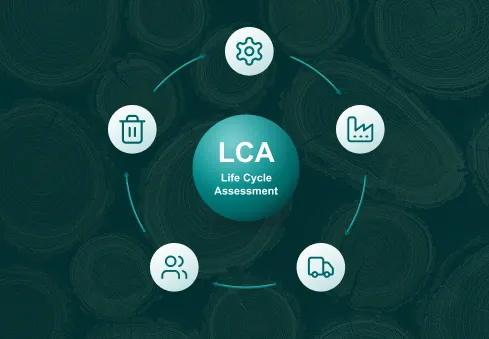
LCA (Life Cycle Assessment) is the methodology standardised by ISO 14040 and ISO 14044 to quantify the environmental impacts of a product or service across its entire life cycle: raw material extraction, production, transport, use and end of life.

It does not only measure CO₂e emissions, but also categories such as water use, fossil resource use, eutrophication, acidification and land use.

Life cycle stages

  1. 01
    Raw materialsExtraction and processing of resources
  2. 02
    ProductionProcesses, energy and plant waste
  3. 03
    DistributionTransport, logistics and packaging
  4. 04
    UseConsumption and emissions during use
  5. 05
    End of lifeRecycling, recovery or disposal
Cradle-to-gate

From raw material extraction until the product leaves the factory gate.

Cradle-to-grave

Also covers distribution, use and end of life, giving a complete picture of the product's impacts.

Objectives

What LCA is for

Identify hotspots

Understand which stages and materials weigh most on the product's impact.

Design better products

Compare materials, packaging, suppliers and ecodesign scenarios on a measurable basis.

Communicate credibly

Back environmental claims with quantified, methodologically sound data, in line with Directive (EU) 2024/825.

Meet customer, tender and regulatory requests

Provide product data for specifications, Minimum Environmental Criteria (CAM), supply chains and sustainability reporting, and lay the groundwork for an EPD.

How we work

How an LCA report is produced

The four phases set out by ISO 14040 and 14044.

01

Goal and scope

Together we define the purpose of the study, the functional/declared unit (e.g. “1 unit of product”) and the system boundaries.

02

Inventory (LCI)

We collect primary data from your company and suppliers through dedicated questionnaires: raw materials, energy, water, packaging, transport, end of life. Missing data is filled in with international databases.

03

Impact assessment (LCIA)

We model the life cycle with professional LCA software and recognised databases (SimaPro, ecoinvent), calculating impacts with the EF 3.1 method across more than 15 categories.

04

Interpretation and report

We analyse hotspots, limitations and data quality, and deliver an ISO 14040/44-compliant report with practical guidance to reduce the impact.

What you get

What the LCA report contains

  • Product description, functional unit and system boundaries
  • Data quality, sources and documented assumptions
  • Results by impact category and by life cycle stage
  • Hotspot analysis, interpretation and limitations
  • Improvement recommendations
Illustrative data

Example: results of a product LCA study

Climate footprint per functional unit
2.8kg CO₂e / functional unit
Raw materials41%
Production26%
Distribution9%
Use17%
End of life7%

The analysis highlights the life cycle stage with the greatest weight on the overall impact, in this case raw material sourcing: a concrete indication of where to act, for example with recycled materials or lower-emission suppliers.

EPD

From LCA to EPD

An EPD (Environmental Product Declaration) is a Type III environmental declaration under ISO 14025. It is based on an LCA study carried out according to Product Category Rules (PCR), verified by an independent third party and published by a Program Operator (e.g. EPD Italy, International EPD System). It is often required or rewarded in public procurement (Minimum Environmental Criteria) and in the construction sector.

The path to an EPD

  1. 1
    LCA study according to PCRCategory rules specific to the product
  2. 2
    EPD documentDrafted under ISO 14025 and EN 15804 for construction
  3. 3
    Third-party verificationIndependent review of data and methodology
  4. 4
    Registration and publicationWith the Program Operator, valid for 5 years

FAQ

Frequently asked questions about LCA

LCA (Life Cycle Assessment) is the methodology standardised by ISO 14040 and ISO 14044 to quantify the environmental impacts of a product or service across its entire life cycle: raw material extraction, production, transport, use and end of life. It does not only measure CO₂e emissions, but also water use, fossil resource use, eutrophication, acidification and land use.
To objectively quantify environmental impacts across the whole life cycle, in order to understand where they are concentrated and avoid shifting the problem from one stage to another, for example by reducing packaging but increasing transport emissions.
It is used to identify hotspots, i.e. the stages and materials that weigh most on the product's impact; to design better products by comparing materials, packaging, suppliers and ecodesign scenarios; to communicate credibly, backing environmental claims with quantified data in line with Directive (EU) 2024/825; and to meet customer, tender and regulatory requests, laying the groundwork for an EPD.
An LCA is not a pass/fail grade. A good result means low impacts per functional unit compared with products that perform the same function. A good LCA study, on the other hand, is one based on primary data, compliant with ISO standards and transparent about assumptions and limitations. Public comparison with other products requires common rules (PCR) and a critical review.
ISO 14040 and 14044 set out four phases: goal and scope definition (purpose, functional unit, system boundaries); inventory analysis (LCI), collecting data on raw materials, energy, water, packaging, transport and end of life; impact assessment (LCIA) with recognised software and databases; interpretation of results and drafting of the report, with analysis of hotspots, limitations and data quality.
There is no general obligation today. However, a growing number of European regulations require life cycle-based impact data for specific product categories: the Ecodesign for Sustainable Products Regulation (ESPR) with the Digital Product Passport, the new Construction Products Regulation, and the Batteries Regulation for the carbon footprint declaration. In Italy, the Minimum Environmental Criteria (CAM) in public procurement reward or require EPDs. In addition, Directive (EU) 2024/825 requires environmental claims to be substantiated, and LCA is the most robust tool to do so.
It depends on the complexity of the product and on the availability of supplier data. After an initial assessment, we agree together on the phases, timing and data needed for the study.

LCA

Request LCA advisory

Tell us which product you want to assess: one of our consultants will get back to you to define the goal, system boundaries and data needed for the study.

  • A 30-minute call with an expert, no commitment
  • We get back to you within 24 working hours
  • A first concrete direction for your ESG goals
This field is required.
Please enter a valid email.
This field is required.

No spam. Your data is processed in accordance with the GDPR.

Thank you, we will be in touch

We have received your request. An ESG expert from Green Future Project Group will contact you within 24 working hours.