Measure your company's emissions
Calculate the emissions of your company (Corporate Carbon Footprint), product or event, in line with international standards such as the GHG Protocol or ISO.


Climate Projects
Offset your company's residual emissions with credits verified against international standards. Tailored portfolios, from project selection to the retirement certificate.
The basics
A carbon credit is a tradable unit representing the certified reduction or removal of one tonne of CO₂ equivalent (tCO₂e) from the atmosphere, achieved through a certified environmental project such as reforestation, forest conservation or renewable energy generation.
Each credit can be purchased and subsequently retired to offset the residual emissions of a company or organisation.
The right journey
Calculate the emissions of your company (Corporate Carbon Footprint), product or event, in line with international standards such as the GHG Protocol or ISO.
Reduce direct and indirect emissions as far as possible through concrete action: energy efficiency, renewable energy, supply chain optimisation.
Offset the residual emissions you cannot yet eliminate by purchasing carbon credits certified to recognised international standards.
Project types
The projects offered by Green Future Project Group fall into two broad categories:
They extract CO₂ equivalent already present in the atmosphere.
Nature-based

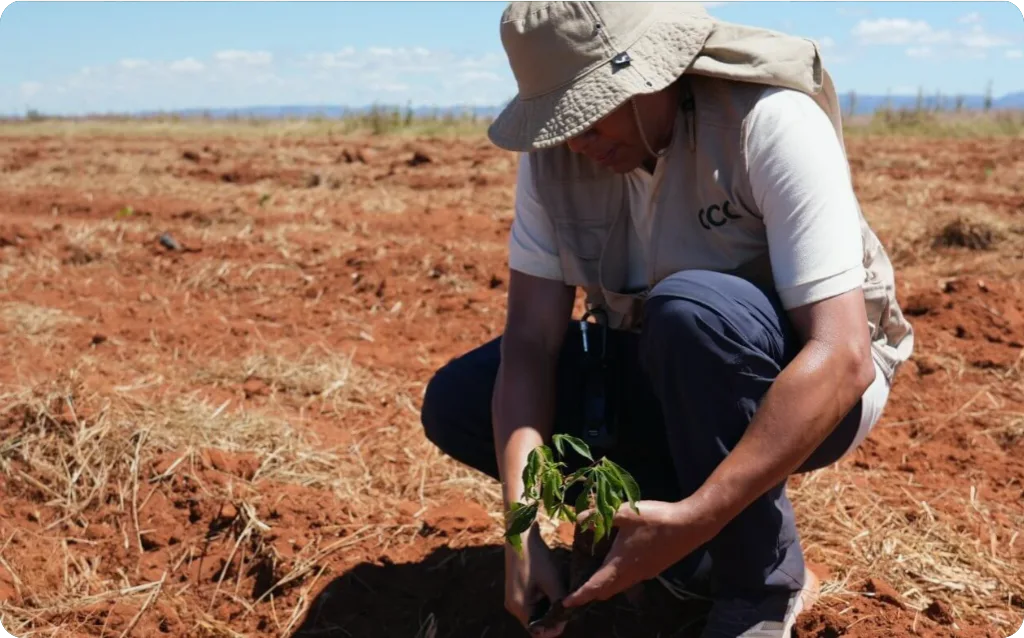
Planting new trees or restoring degraded forests to absorb CO₂e from the atmosphere and increase forest cover.

Conservation and restoration of coastal ecosystems such as mangroves, seagrass meadows and salt marshes, which sequester large amounts of CO₂ equivalent.

Sustainable farming practices that increase carbon sequestration in soil, vegetation and biomass, reducing net emissions.

Sustainable forest management practices that reduce emissions compared with conventional use scenarios.
Tech-based

Charcoal produced from biomass which, incorporated into agricultural soil, sequesters carbon stably and durably over the long term.
They prevent future emissions of CO₂ equivalent.
Nature-based

Reducing Emissions from Deforestation and forest Degradation: protects existing forests, avoiding the emissions their destruction would cause.
Community-based
Replacing traditional stoves with low energy consumption models, reducing emissions and improving air quality in local communities.

Supplying safe drinking water, removing the need to boil water with fossil fuels and reducing the emissions of local communities.
Tech-based
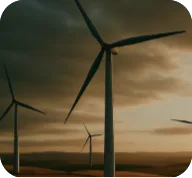
Installing solar, wind or hydroelectric plants in developing countries to replace fossil energy sources, reducing CO₂ equivalent emissions.
Want to understand which type of project best fits your goals?
Request more informationQuality
A high-quality carbon credit meets seven fundamental criteria, verified by independent standards and verification bodies:
The project would not have gone ahead without the revenue from credits. The impact is genuinely additional to the baseline scenario.
Credits are issued only after verification by an independent third party.
No negative impact on the environment, local communities or biodiversity. The project causes no collateral damage.
Emissions reduced in one area do not cause increases elsewhere. The project boundary is clearly defined.
Periodic checks by accredited independent bodies (VVB) guarantee the robustness of the project.
Every credit has a unique identifier in the standard's public registry.
Storage is guaranteed over the long term with dedicated risk buffers. Active protection against unforeseen events.
Green Future Project Group selects only credits that meet all 7 criteria, to guarantee real, verifiable and lasting impact.
Explore our projectsStandards
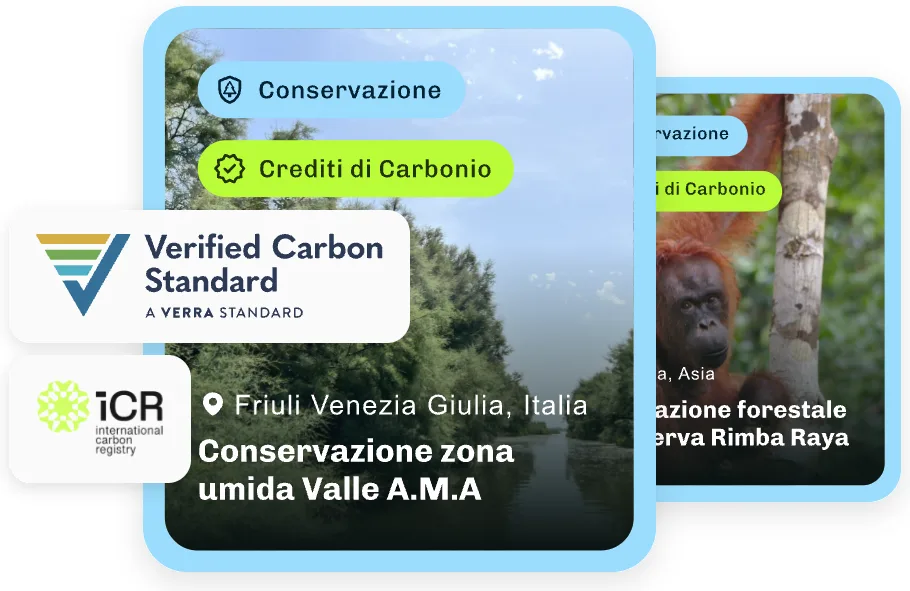
Carbon credits are certified by independent standards that require a process of registration, validation and verification by independent third parties.


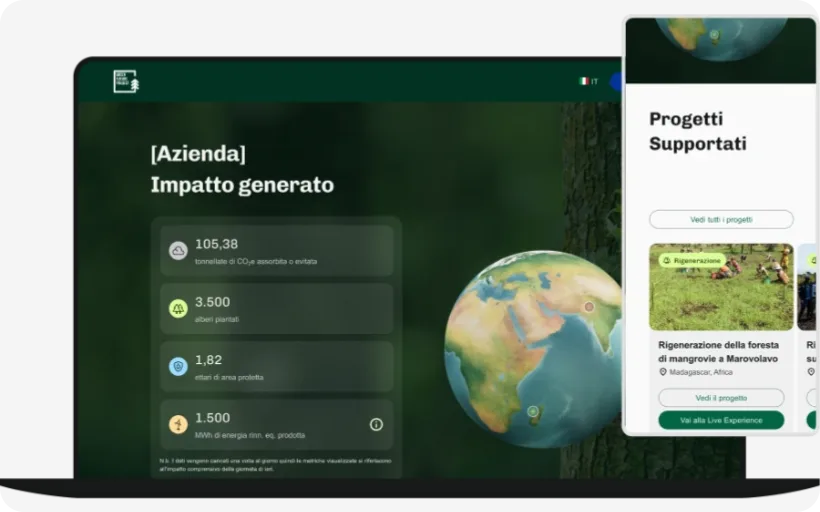
Every credit has a unique identifier in the public registry of its reference standard. Once retired, it can no longer be transferred, resold or reused, eliminating the risk of double counting.
FAQ
Everything you need to know before buying carbon credits.
Yes. We support companies in building diversified portfolios aligned with their ESG strategy, combining different project types, geographical areas and levels of price and quality.
For example, a portfolio can combine emission reductions and carbon removals, or nature-based and community-based projects, spreading the investment across different methodologies and territories. Diversification can help build a strategy more consistent with the organisation's goals and spread exposure across different types of solution.
Carbon credits are a tool for channelling financial resources towards climate projects that reduce or remove greenhouse gas emissions, helping to mobilise capital towards mitigation measures that might otherwise not be carried out.
For companies, they make it possible to finance climate action outside their own value chain, supporting, for example, ecosystem conservation and restoration projects, reforestation or other climate solutions. The credit system also allows climate results to be quantified, verified and tracked, making them easier to account for and helping to prevent the same result being counted more than once.
Supporting low-quality projects can expose a company to environmental integrity, reputational and regulatory risks. If the reductions or removals claimed are not genuinely additional, are overestimated, or carry non-permanence or double counting issues, the credits generated may not represent the climate impact claimed.
This can undermine the effectiveness of the company's climate strategy, weaken the credibility of its climate claims and expose it to greenwashing risks, stakeholder challenges and growing regulatory scrutiny. That is why certification must be paired with due diligence on the quality of the project and of the credits it generates.
Let's talk
Tell us about your company and your sustainability goals: one of our ESG experts will get back to you to identify the best starting point, with no commitment.
We have received your request. An ESG expert from Green Future Project Group will contact you within 24 working hours.