ESRS standard
The European Sustainability Reporting Standards required by the CSRD directive, with double materiality, thematic disclosures and mandatory datapoints.

ESG Suite Module
From the double materiality assessment to structured data collection, all the way to a report compliant with ESRS, GRI and VSME. A guided, collaborative and standard-agnostic process.
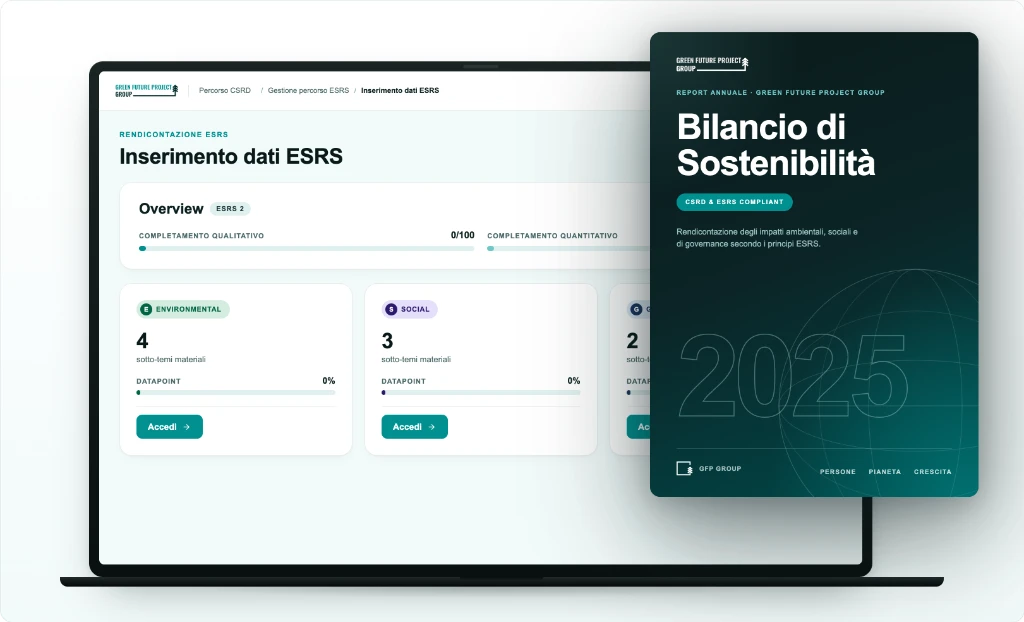
 Sustainability Reporting Software
End-to-end ESG reporting
Green Future Project Group's ESG Reporting Software supports companies through every phase of sustainability reporting: from the double materiality assessment to identifying impacts, risks and opportunities (IRO), from structured ESG data collection aligned with the standards, all the way to generating the final report.
The platform is designed to be standard-agnostic: it supports ESRS (for companies subject to the CSRD), GRI and VSME (for Italian SMEs), and lets you switch reporting standard without losing the structure of the data already collected.
Standard-agnostic
The platform structures disclosures according to the framework chosen by the company:
The European Sustainability Reporting Standards required by the CSRD directive, with double materiality, thematic disclosures and mandatory datapoints.
The Global Reporting Initiative Standards, an international reference for reporting impacts on the environment, people and the economy.
The voluntary standard for SMEs: a proportionate scope of disclosures, also useful to respond to ESG requests from clients and financial institutions.
Double materiality assessment (DMA)
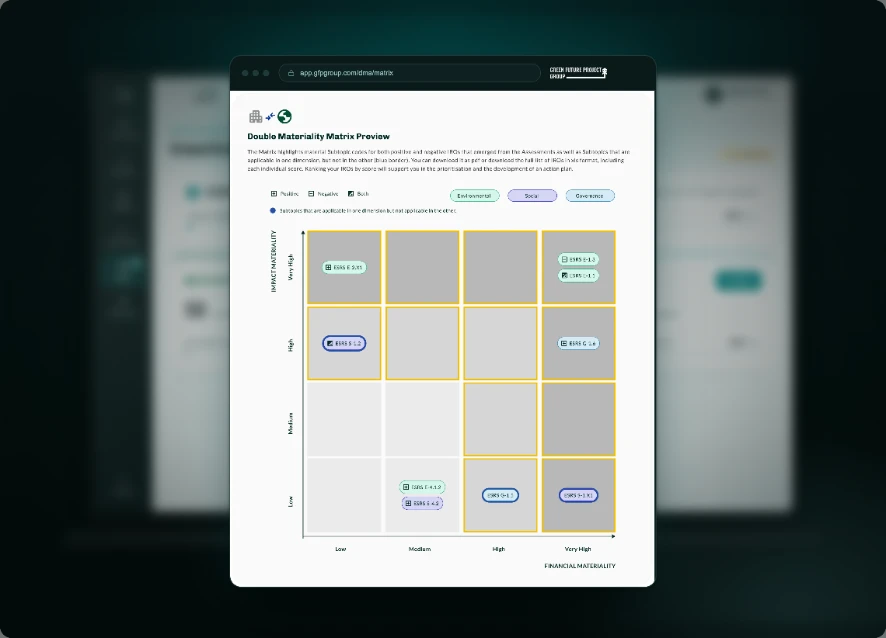
Every ESRS report starts from double materiality, which looks at two dimensions: the company's impact on people and the environment (impact materiality) and the financial risk or benefit that ESG topics represent for the business (financial materiality).
From the impact assessment to the financial one, the platform separately collects, for each dimension, the company's assessment and stakeholder feedback. Results then feed into an IRO matrix, which identifies material topics and sets priorities.
Impact Materiality Assessment and Financial Materiality Assessment as two distinct phases
Structured engagement of internal and external stakeholders for each dimension
Matrix exportable as PDF to share with stakeholders
Excel export with the full detail of IRO scores and assessments
Collaborative data collection
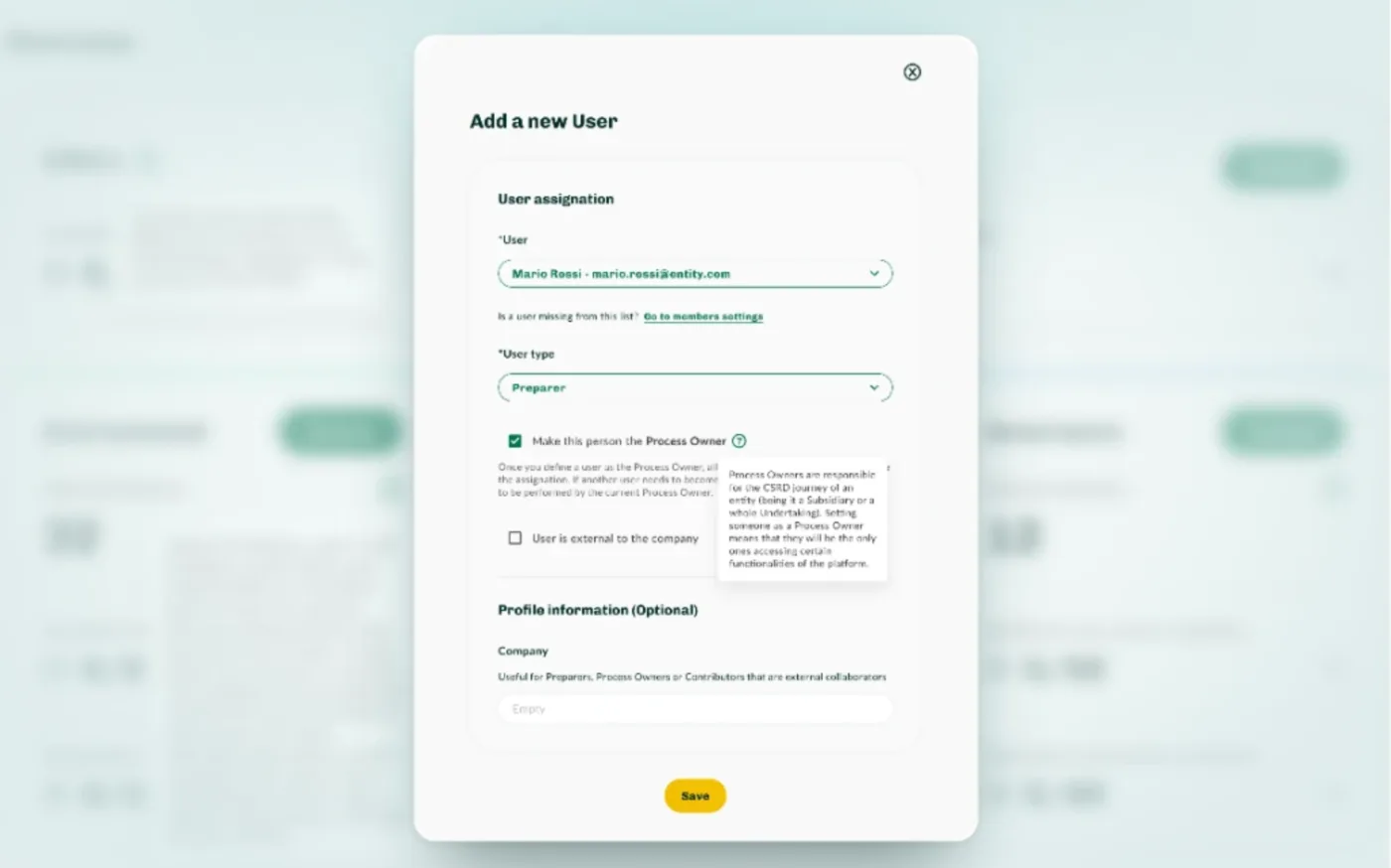
Each internal contact only receives the disclosures relevant to them, with predefined units of measure, deadlines and visible progress. The sustainability manager monitors dataset completeness in real time, without chasing different versions of the same spreadsheet.
Disclosures assigned by department and contact person
Full traceability of author, date and supporting documents for every value
Real-time progress tracking of the data collection
Data ready for review by an independent third-party assurance provider
Report generation
Once data collection is complete, the platform generates the document with indicators, tables and disclosures organised according to the chosen standard, ready for review and for the sustainability report's graphic layout.
Report structured according to ESRS, GRI or VSME
Indicators and tables generated from validated data
Comparison with previous reporting periods
Support from the advisory team in reviewing the content
How to buy it
The software can be adopted independently by the internal team, or paired with Green Future Project's operational support across every phase of reporting.
The company uses the platform independently: the internal team manages the double materiality assessment, assigns disclosures to contact persons, collects the data and generates the report according to the chosen standard.
Green Future Project provides initial training on using the platform and ongoing technical assistance; methodological and operational oversight stays in-house.
Companies with an already structured sustainability function, that have completed at least one reporting cycle and are looking for the tool to industrialise the process.
Full access to the DMA, Data Entry and Reporting modules
No limit on the number of users involved
Technical assistance and updates included
Ideal for teams already trained on the relevant standards
FAQ
Answers to the most common questions about the ESG Reporting Software.
A dedicated tool that supports the company through the entire reporting journey: from choosing the standard to double materiality, from data collection to generating the final report. Compared to shared spreadsheets or one-off consulting, it avoids fragmented, unmapped data, ensuring traceability and compliance with CSRD, GRI or VSME.
ESRS is the mandatory standard for companies subject to the CSRD and follows the EFRAG framework; GRI is a voluntary standard, often already adopted by organisations with an established reporting history; VSME is the simplified voluntary standard designed for micro, small and medium enterprises. Green Future Project's software lets you select the standard from the very start of the process, so data collection and report structure adapt accordingly.
The software is available in two modes. 'Software only': you purchase it and manage it independently, with your team following every phase directly, from double materiality to data collection and the final report. 'Hybrid': you purchase the software and pair it with support from Green Future Project's experts across every phase of data collection and structuring, with the platform always available as a repository and usable independently whenever you prefer. You can switch between modes at any time.
It's the starting point of every ESRS report: it assesses both the company's impact on people and the environment (impact materiality) and the financial risks and opportunities tied to ESG topics (financial materiality). Green Future Project's Double Materiality Assessment module guides the company from the impact assessment to the financial one, all the way to the final matrix, exportable as PDF for communication or as Excel with the full detail of scores for each IRO.
It isn't mandatory for VSME, which offers SMEs a leaner reporting framework than ESRS. It remains a useful exercise, however, to identify the topics most relevant to the company before starting data collection.
ESG reporting involves multiple business functions — sustainability, legal, HR, operations — and rarely does a single person have access to all the data. Green Future Project's software has three authorisation levels: Process Owner (manages users and validates information in the DMA and Data Entry modules), Preparer (edits data and documentation), and Contributor (limited access to data entry), with no limit on the number of operating users.
Yes. Double materiality is carried out with a bottom-up approach: first for each entity and for the reporting company, then consolidated at group level, with the option to assign custom weights to the parent company regardless of parameters such as headcount or revenue.
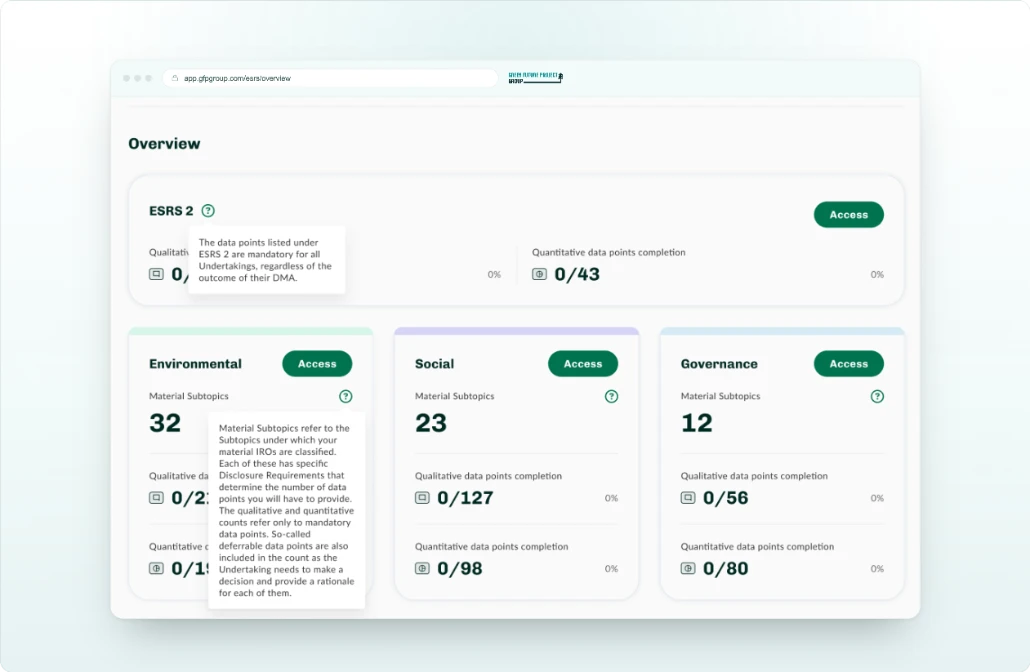
Information requirements are broken down by pillar — Environmental, Social, Governance — and for each subtopic the platform shows the number of material items and the completion percentage of qualitative and quantitative data points. A Task Manager centralises the activities to be carried out, while each data point shows applicability, the relevant regulatory reference, and the option to attach supporting documentation.
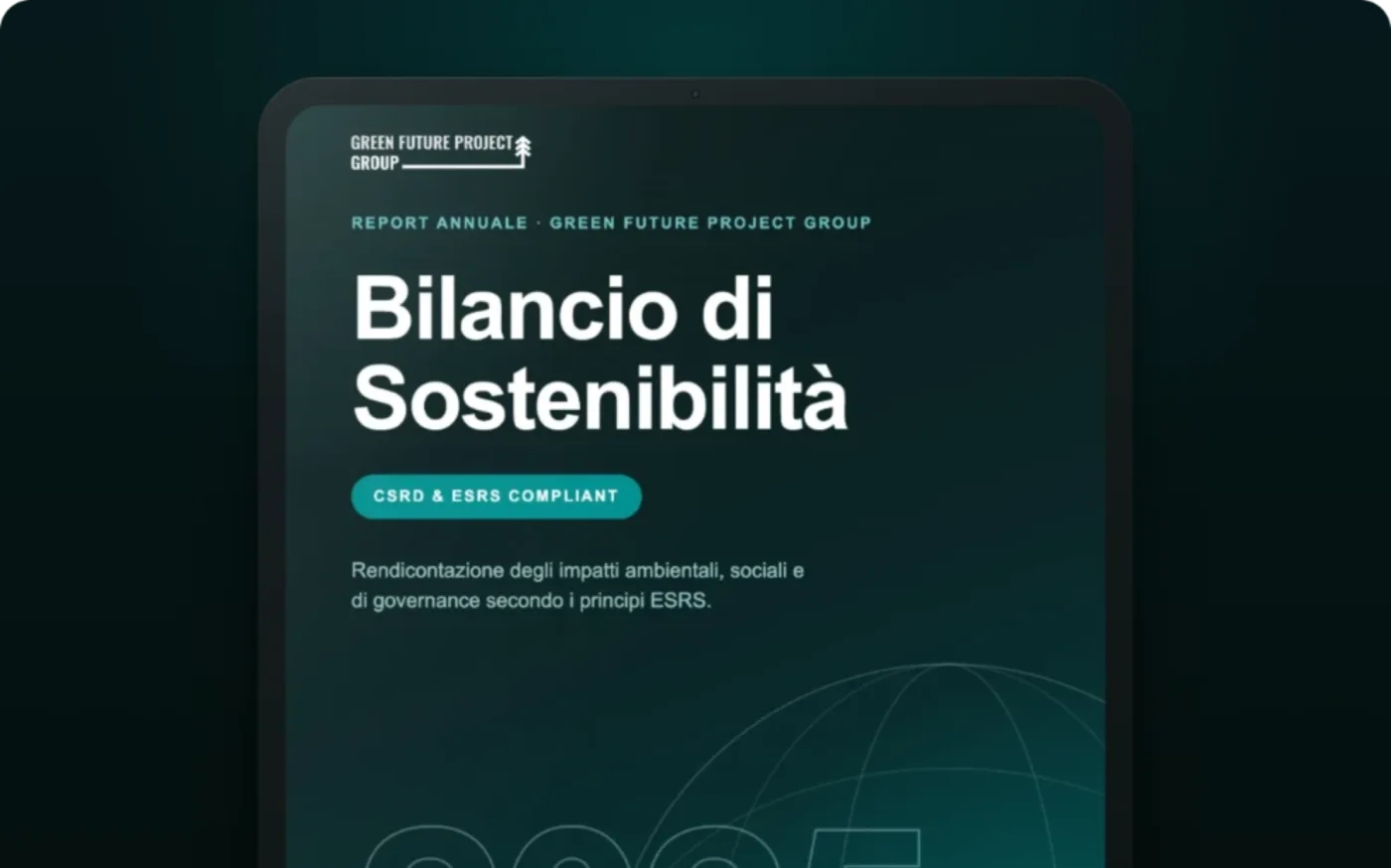
The Sustainability Reporting module organises the report into sections (Setup & Layout, Introduction, General Disclosures and others), each with its own progress status. You can customise the content — including the letter to stakeholders — before exporting the final document in Word format, with a cover page tailored to the chosen standard.
Yes. Beyond choosing GRI as a standalone reporting standard, a path built on the EFRAG framework can integrate subtopics from other standards within double materiality, ensuring continuity with any GRI reporting already under way.
Let's talk
Tell us about your company and your sustainability goals: one of our ESG experts will get back to you to identify the best starting point, with no commitment.
We have received your request. An ESG expert from Green Future Project Group will contact you within 24 working hours.