

Carbon Footprint &
Utilities Optimisation Software
The software to calculate your company’s carbon footprint and monitor energy consumption and utilities in real time. Download your carbon footprint report with a single click.
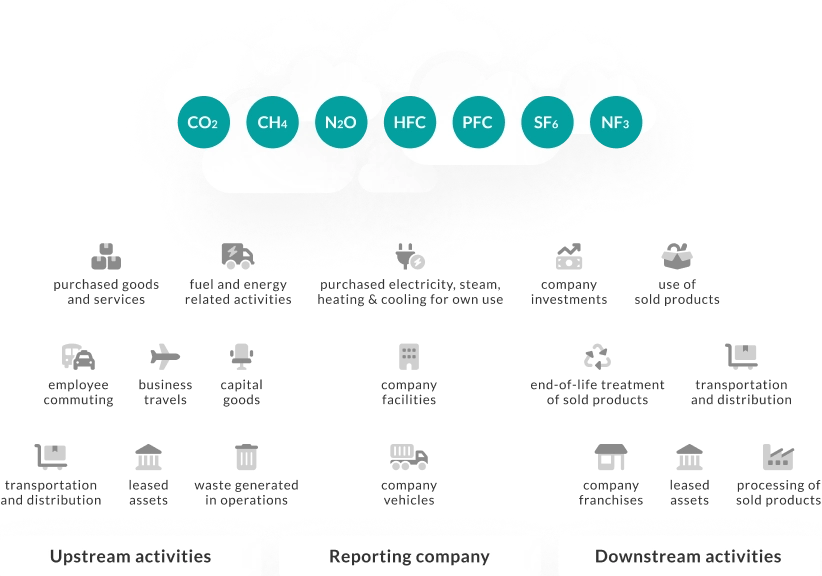
What are Scope 1 2 3 emissions?
Understanding how greenhouse gas emissions contribute to your carbon footprint is the first step to an effective decarbonisation strategy.
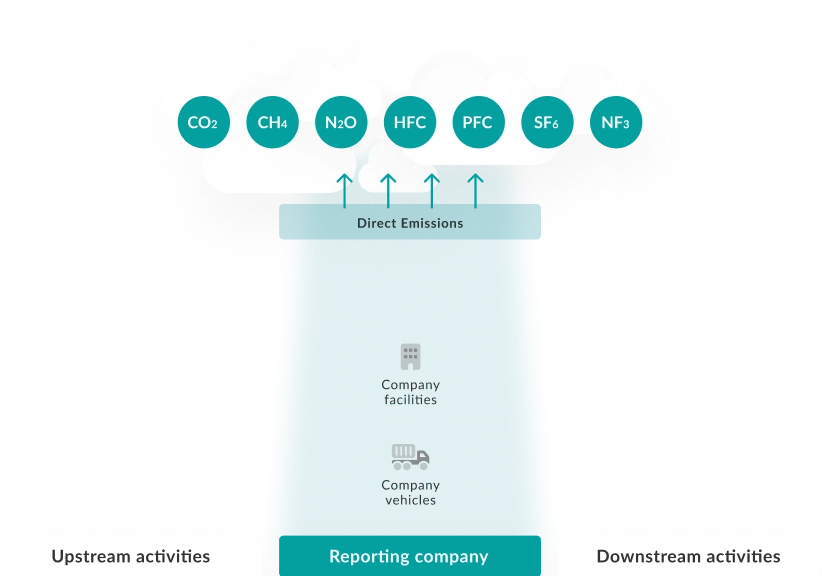
Scope 1
Scope 1 emissions are those generated onsite from sources that are owned or controlled by an organisation.
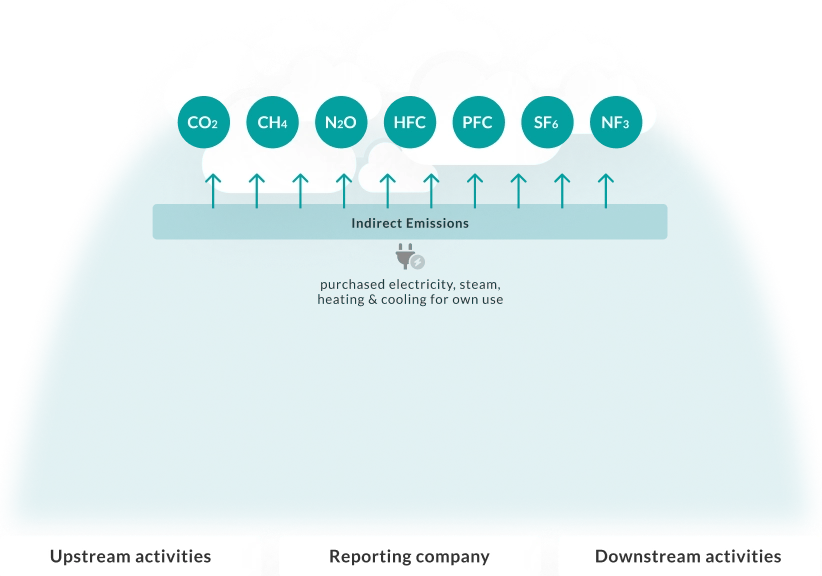
Scope 2
This category refers to indirect GHG emissions associated with the purchase of energy. Although they are not generated onsite, they are accounted for in an organisation’s GHG inventory as they result from an organisation's energy consumption.
Scope 3
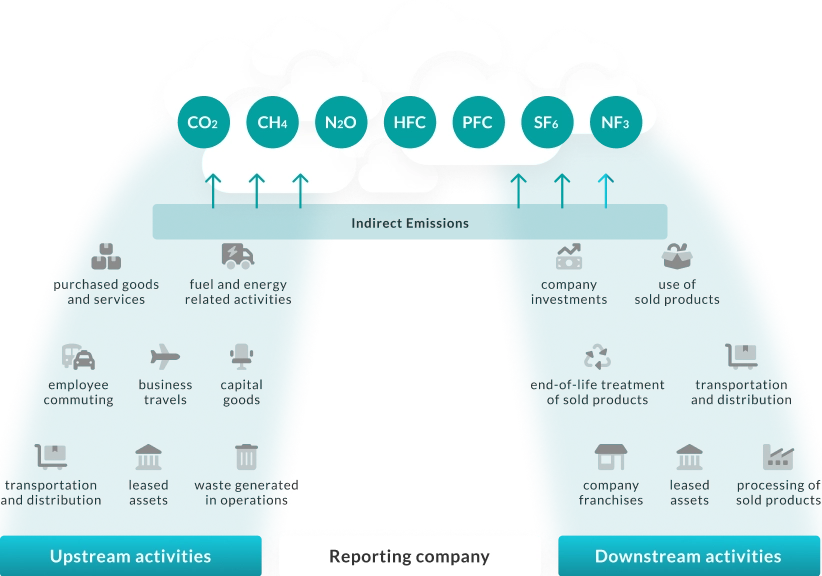
Scope 3 emissions are indirect GHG emissions that occur within an organisation’s value chain, in both upstream and downstream activities. These are emissions for which an organisation is responsible, despite originating from sources it does not own or control.
Solutions to measure energy consumption and calculate your company’s carbon footprint


Carbon Footprint Software
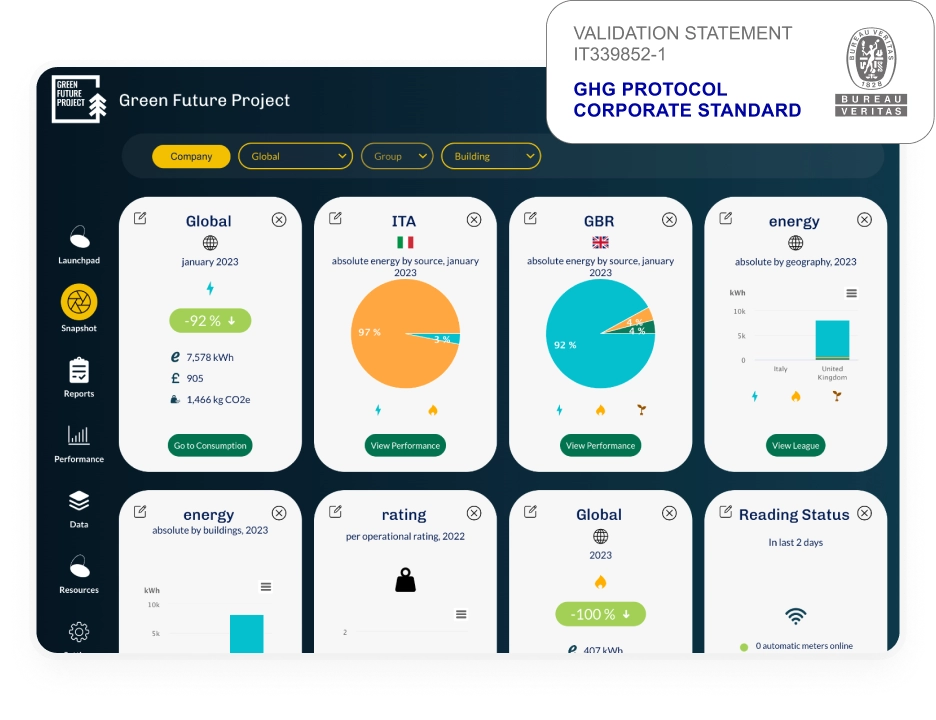
Calculate your company’s carbon footprint across scope 1 2 3 with accuracy and transparency, in full compliance with the GHG Protocol and ISO 14064-1. Download your carbon footprint report with a single click.

Utilities Optimisation Software
Monitor energy consumption in real time and analyse data by source, time of day, and period. Identify peaks, inefficiencies, and opportunities for improvement to build a more effective energy strategy.

Carbon Footprint & Utilities Optmisation Software
An advanced solution for monitoring energy consumption and calculating your company’s CO2 equiv. emissions. Developed in alignment with the GHG Protocol and ISO standards, it’s designed to provide accurate and centralised control even across geographically distributed sites.
Why is carbon management important?

Measure to improve
If you don’t accurately measure your CO2e emissions, you won’t know what to optimise or how to effectively reduce your impact. Carbon accounting and emissions monitoring are the essential foundations for developing a targeted decarbonisation strategy.

Competitive advantage
Increasingly, customers, investors, and suppliers are choosing companies that prioritise sustainability. Understanding your carbon footprint is a critical first step towards developing a carbon management strategy.

Regulatory compliance
Regulations such as the CSRD and voluntary initiatives like SBTi mandate the accurate and documented calculation of corporate carbon emissions as a fundamental prerequisite.

Cost optimisation
Developing a carbon management plan helps identify inefficiencies in operational processes. Taking action on these insights enables more efficient resource management and leads to a tangible reduction in operational costs.

Prepare your ESG report
Emissions reporting is a core element of any sustainability report. It offers a transparent and detailed view of your organisation’s environmental impact, a key factor in meeting ESG expectations.

Develop your carbon management strategy
We provide end-to-end consultancy services, covering GHG emissions reporting for companies, products and events, along with tailored decarbonisation strategies.
Discover how companies partner with GFP to measure their carbon footprint and enhance energy efficiency


WBSC
WBSC, using the Carbon Footprint Software, calculated its 2022-2023 carbon footprint following the GHG Protocol. It has developed strategies to reduce its environmental impact and offset part of its emissions.


CAV
Concessioni Autostradali Venete (CAV) has prepared its Carbon Footprint Report in accordance with ISO 14064-1. This marks a key first step in starting its sustainability journey, using an effective tool to improve ESG capabilities.


SINA HOTEL
Sina Hotel calculates their Scope 1, 2, and 3 emissions for the entire group using the Carbon Footprint Software and improves energy efficiency at its Viareggio site with the Utilities Optimisation Software.


KERAKOLL
By integrating the Carbon Footprint & Utilities Optimisation Software, Kerakoll is actively monitoring its energy consumption and calculating its carbon footprint across Scopes 1, 2, and 3.


ACETUM
With the Carbon Footprint & Utilities Optimisation Software, Acetum has improved its energy efficiency and is working to reduce its environmental impact. Acetum has also prepared a comprehensive Carbon Footprint Report.

Let's talk
Book a free introductory call
Tell us about your company and your sustainability goals: one of our ESG experts will get back to you to identify the best starting point, with no commitment.
- A 30-minute call with an expert, no commitment
- We get back to you within 24 working hours
- A first concrete direction for your ESG goals
Thank you, we will be in touch
We have received your request. An ESG expert from Green Future Project Group will contact you within 24 working hours.